
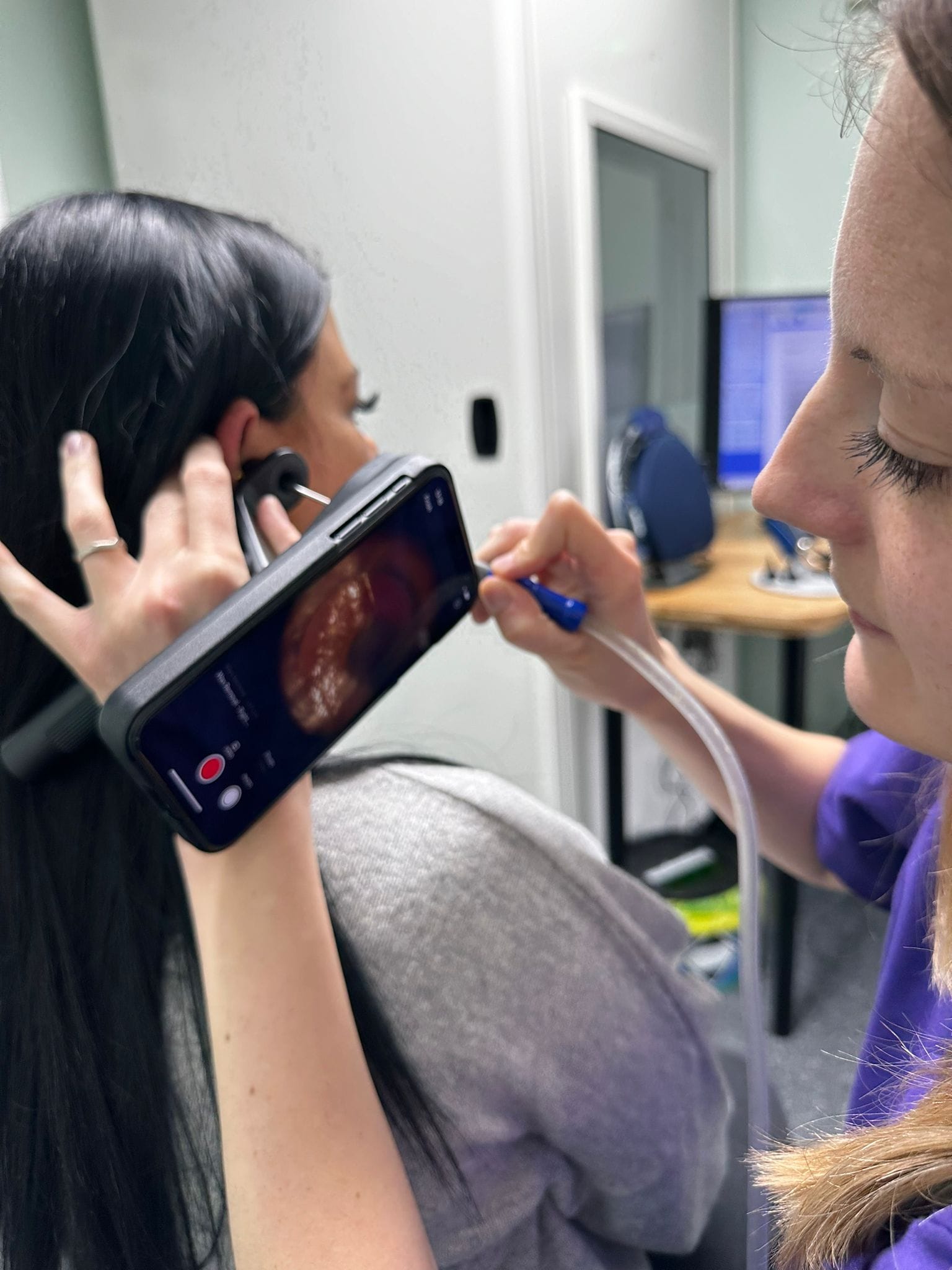
Our wax removal appointments are 30 to 45 minutes and include video otoscopy to show you the health of your ears prior to treatment. Once the wax has been removed, you will be shown the finished result.
We recommend you use an olive oil ear spray (earol or cl-ear oil) for 4 to 5 days before your appointment.
Please call us for advice if you have any queries prior to booking your wax removal appointment.
Wax removal via micro-suction in one or both ears.
If you require further treatment due to excessive wax that cannot be removed in in the initial consultation.
If you attend your wax removal appointment and we do not find any ear wax that requires treatment, the cost of your appointment is reduced to £40, and a mini hearing assessment will be completed.
If you are on our Eyes and Ears Care Plan (£10.40/month), you receive a 50% discount on all your wax removal appointments.


Ear wax or cerumen, is mostly sebum (dead skin cells), combined with other substances such as keratin and cholesterol. It varies in colour and consistency, depending on how long it has been there. Wax is made by the sebaceous and ceruminous glands in the ear canal.
Ear wax helps to protect our ear. It helps to prevent the skin in the ear from drying out and feeling irritated. Wax also traps dirt and dust to stop it reaching the ear drum and causing damage. Wax has anti-bacterial and anti-fungal properties. Wax also helps to carry dead skin cells out of the ear.
In many cases, the ears are self-cleaning and will expel the wax without any intervention.
No! Cotton buds push wax deeper into the ear canal and can cause trauma to the ear drum. When patients have used cotton buds, it makes removal of the wax via micro-suction more difficult. Cotton buds can also cause ear infections, as they often graze the delicate skin in the ear. The tips of the cotton bud can also break off and get stuck in the ear canal.
Use an olive oil ear spray in the affected ears for 4 to 5 days prior to your appointment. Usually, one or two sprays a day is sufficient for successful wax removal. If the Audiologist finds the wax hasn’t responded to the olive oil, or the wax requires further softening, you will be given further recommendations.
Everybody is different, sometimes wax removal is a one-off requirement, other patients require regular wax removal. Discuss this with the Audiologist at your appointment and they will guide you on future recalls.
If you wear hearing aids, you may find ear wax more problematic as the hearing aid partially blocks the ear canal and limits the time for the wax to naturally migrate out of the ear. We are also introducing a ‘foreign body’ to the ear canal, which may increase wax production. Seeing the Audiologist routinely to check your ears and help maintain the hearing aids will reduce wax related issues.
Couldn’t find what you were looking for? Get in touch with our audiologist: